Back to All Prompts
ChatGPT • 2:3
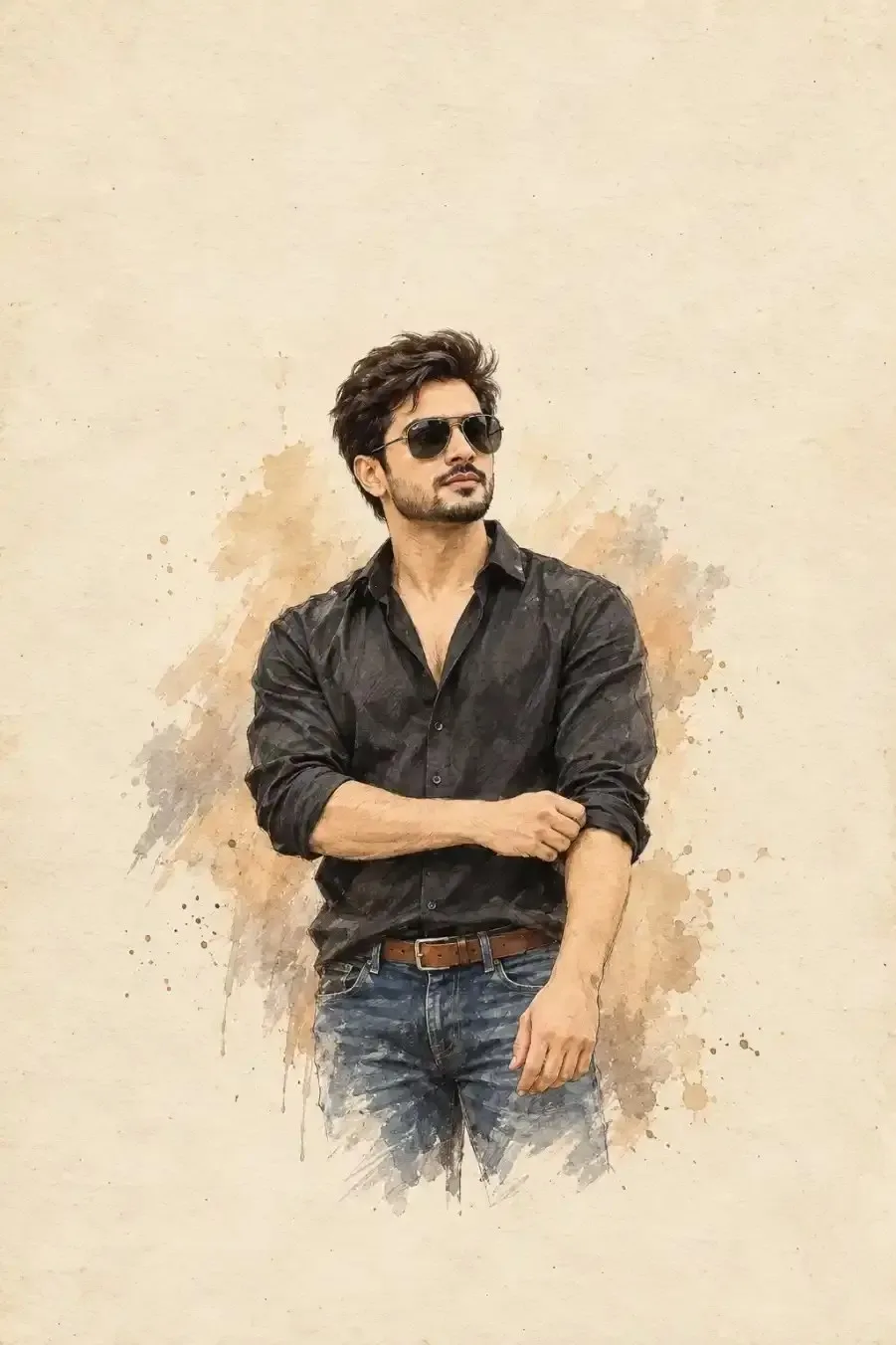
Vintage Paper Sketch Portrait with Watercolor Details — ChatGPT AI Photography Prompt Recipe on Faymas
Illustration & 3D by Alex Rivera

Vintage Paper Sketch Portrait with Watercolor Details

Exact Prompt Recipe Scroll to read more
### SMALL CENTERED SUBJECT + STRONG FACE IDENTITY LOCK + EXACT POSE ## INFORMATION TO REQUEST BEFORE GENERATION Ask only: **“Please upload one clear, high-quality photo of your face. Front-facing or slightly angled, with the full face clearly visible.”** Then **STOP and wait for the upload.** Do not generate the image until the face photo is provided. --- # AFTER THE USER UPLOADS THEIR PHOTO Create a **premium minimalist hand-drawn paper-cover portrait illustration** using the uploaded person's photo as the **absolute identity reference**. Use the supplied pose-reference image **ONLY for pose, body positioning, framing, clothing direction, arm placement, and overall composition**. The final artwork must clearly look like the **same person from the uploaded identity photo**, not the person in the pose reference. --- # HIGHEST PRIORITY — FACE IDENTITY LOCK Preserve the uploaded person's real facial identity as accurately as possible. Match: - face shape - forehead proportions - natural hairline - hairstyle - hair texture - eyebrow shape - eye shape - eyelids - eye spacing - nose structure - nostril shape - lips - mouth width - cheek structure - jawline - chin shape - ears where visible - beard and moustache pattern - skin tone - natural age - facial asymmetry - distinctive facial features The final result must remain **immediately recognizable as the uploaded person**. Do not: - beautify the face - replace it with a generic AI face - alter skin tone - redesign facial proportions - smooth away natural details - make the subject look like a different model Even though the final result is illustrated, **identity accuracy must remain stronger than stylization**. --- # EXACT POSE LOCK Reproduce the same sleeve-adjusting pose from the pose reference. Maintain: - torso facing mostly toward camera - slight body rotation - relaxed shoulders - upright head - chin subtly raised - confident posture - one arm extending diagonally downward - opposite arm crossing the torso - crossing hand gripping/adjusting the opposite sleeve near the forearm - extended hand hanging naturally with relaxed fingers Preserve the correct overlapping order: **torso → crossed arm → gripping hand → extended forearm → extended hand** Do not: - reverse the arms - fold both arms - put hands in pockets - leave both arms down - change the sleeve-adjusting gesture - create awkward wrists or fingers Hands must remain anatomically correct. --- # SUBJECT SIZE & POSITION — VERY IMPORTANT Keep the **main subject relatively small in the overall canvas**. The person should occupy approximately: **35–45% of the total image height** and should **NOT fill the frame**. Position the subject: - exactly or almost exactly centered - balanced horizontally - around the visual center of the canvas - with generous empty space above the head - with generous empty space on both sides - with generous breathing room around the entire figure The overall image must feel like a **minimalist paper-cover artwork**, not a close-up portrait. ### Negative-space rule At least **55–65% of the overall canvas should remain mostly clean background / negative space**. Do not zoom in. Do not crop tightly around the body. Do not enlarge the subject to dominate the page. The small centered figure with large surrounding blank paper space is a **mandatory composition feature**. --- # FRAMING Use a vertical portrait composition. Show approximately: **upper thighs to slightly above the head** while still keeping the overall person visually small within the full page. The figure should be completely readable without awkward cropping. --- # CLOTHING Use the same premium casual outfit direction: - dark charcoal or black button-up shirt - shirt slightly open around upper chest - sleeves rolled or pushed toward the forearms - dark blue denim jeans - brown leather belt Maintain realistic clothing folds generated by the arm pose. Do not add: - logos - typography - graphics - jackets - bright colors - unrelated accessories Minor jewelry from the identity photo may be preserved subtly. --- # SUNGLASSES Add classic dark aviator-style sunglasses. They must: - fit naturally on the uploaded person's real face - align correctly with the nose bridge - follow facial perspective - use realistic dark lenses - include subtle natural reflections - not distort the facial structure The sunglasses must never be used to hide inaccurate identity. --- # ART STYLE — LOCKED Create a **minimalist hand-drawn paper-cover illustration** combining: - fine ink sketch lines - hand-drawn contour work - subtle pencil-like detailing - light watercolor washes - dry-brush texture - restrained pigment - handcrafted imperfections - premium editorial illustration quality The rendering should feel like: **a realistic portrait carefully translated into a refined handmade sketch-and-watercolor illustration printed on textured paper.** Keep the face slightly more detailed than the rest of the body. Avoid: - cartoon style - anime - comic-book exaggeration - thick oil paint - glossy digital painting - 3D rendering - vector-flat appearance - hyper-polished plastic skin - excessive watercolor blur --- # BACKGROUND — MINIMAL PAPER COVER Use a warm vintage paper background. Background qualities: - ivory - warm cream - soft beige - subtle handmade paper grain - light natural fiber texture - slight aged-paper appearance Keep the background predominantly clean. Behind the subject, add only a **small restrained cluster of loose watercolor / dry-brush strokes**. Use: - tan - beige - muted ochre - very light brown - subtle gray-brown accents The brush strokes should stay **close to the subject** and must not cover the whole page. Do not create a full environmental scene. No: - buildings - furniture - rooms - landscapes - objects - decorative borders - typography --- # BRUSHWORK PLACEMENT The background brushwork should function only as a subtle visual anchor behind the person. Keep it: - centered around the subject - slightly larger than the person - organic - irregular - understated - softly faded at the edges Add only minimal: - paint splatter - light drips - broken dry-brush marks Do not make the splashes too large or visually noisy. --- # SUBJECT EDGE TREATMENT Keep the face and upper torso relatively crisp. Toward the: - lower shirt - jeans - outer sleeves - bottom of the figure allow the drawing to softly transition into: - unfinished pencil strokes - light watercolor fading - dry-brush edges - broken pigment marks Do not dissolve the face. Do not blur facial features. --- # HEAD & EXPRESSION Keep: - head nearly upright - slight three-quarter orientation - chin subtly raised - composed expression - confident presence - relaxed or closed lips Do not create an exaggerated smile. The uploaded person's facial structure always takes priority. --- # CAMERA / REALISM FOUNDATION Build the portrait as if photographed using: - 70–85 mm portrait perspective - natural facial proportions - minimal lens distortion - realistic head-to-shoulder scale - anatomically correct arms and hands Then translate that photographic structure into a hand-drawn illustration. --- # QUALITY PRIORITY Prioritize in this exact order: 1. **Uploaded person's facial identity** 2. **Small centered subject composition** 3. **Large clean negative space** 4. **Exact sleeve-adjusting pose** 5. **Correct arms, hands, and fingers** 6. **Minimalist hand-drawn paper-cover style** 7. **Premium editorial finish** --- # NEGATIVE CONSTRAINTS Do not: - enlarge the subject excessively - make the person fill the frame - place the person near the edge - crop tightly - reduce the negative space - create a busy background - copy the pose-reference person's face - alter the uploaded person's identity - generate a generic handsome face - change skin tone - significantly alter age - alter facial proportions - reverse the arm pose - create extra fingers - create missing fingers - merge hands - deform wrists - shorten or stretch arms unnaturally - create an oversized head - create a tiny head - hide the face in shadows - cover too much of the face with sunglasses - use cartoon/anime/3D/CGI style - add text - add logos - add watermarks ## FINAL VISUAL GOAL The finished artwork should look like a **premium minimalist illustrated paper cover featuring a small, centered, recognizable portrait of the uploaded person**, surrounded by **large areas of clean warm paper**, with subtle hand-drawn lines and restrained watercolor brushwork behind the figure.
Scroll for more
App: ChatGPT Ratio: 2:3
Photo Reproduction Guide

How to Recreate This Photo in ChatGPT

Follow this quick 4-step workflow to generate an identical visual style using the exact parameters tested for Vintage Paper Sketch Portrait with Watercolor Details.

1

Copy the Recipe

Click the Copy Full Prompt button above. All key descriptors, lighting commands, and lens tags are copied directly to your clipboard.

2

Open ChatGPT

Open your ChatGPT app or web interface (e.g. ChatGPT chat, Bing Image Creator prompt bar, or Midjourney Discord).

3

Set 2:3 Ratio

Set your canvas size to 2:3. This gives you the natural composition shown above.

4

Customize Subject

Want your own face or a different subject? Simply change the character description or hair/clothing while keeping the lighting and camera tokens intact!
Pro Tip: To maintain this exact lighting in ChatGPT, keep the camera, aperture, and lighting keywords unmodified.
✓